
Maintain
Water Softener Maintenance Checklist
Water softener maintenance is mostly a monthly salt check, a resin cleaner every few months if you have iron, a yearly inspection of the brine tank, injector and valve, and a deeper tank cleaning every few years.
Disclosure: watersoftenerguide.net is owned by the team behind SoftPro Water Systems and Quality Water Treatment, which sell some of the parts and systems we link to. Our steps follow the makers' manuals and published instructions, checked October 2026. Always check your own model's manual first. Ownership disclosure
View at Quality Water Treatment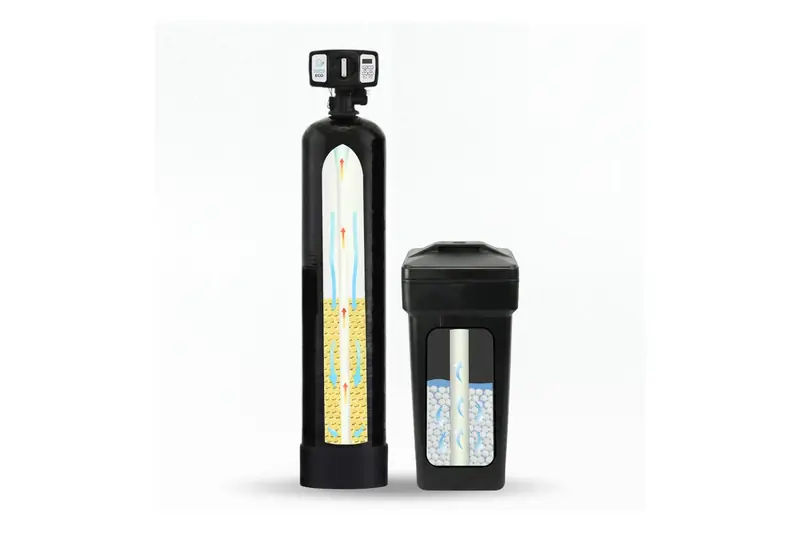
On this page
Quick answer
- Check the salt monthly and keep it above the water line.
- Add salt every 1 to 3 months, depending on use.
- Use a resin cleaner every few months on iron-bearing water.
- Inspect the brine tank, injector and valve seals once a year.
- Test softened water yearly to confirm the softener still works.
A salt-based softener has few moving parts, but the ones it has depend on clean brine, clean passages and the right settings. The schedule below pulls together what the Fleck and Pentair manuals and the SoftPro and Quality Water Treatment (QWT) guides recommend. Where they disagree, we give the range; your own owner's manual always wins.
| When | Job | Source guidance |
|---|---|---|
| Monthly | Check salt level, look for a bridge | SoftPro: once a month. QWT: 4 to 6 weeks |
| Every 1 to 3 months | Add salt | QWT: normally a pair of 40-lb bags |
| Every 3 to 12 months | Resin cleaner (iron or fouling) | QWT: quarterly. SoftPro: Rust Out every 3 to 12 months |
| Every 6 to 12 months | Sanitize with bleach | QWT: every 6 to 12 months |
| Yearly | Inspect brine tank, injector, brine line; valve service; hardness test | QWT: annual injector check and valve service |
| Every few years | Empty and clean the brine tank | Pentair: about every 3 years, sooner if sludge builds |
Monthly checks
Lift the brine tank lid once a month. SoftPro's interval is monthly and QWT's is 4 to 6 weeks. You are looking at three things.
- Salt level. The salt should sit higher than the water and fill somewhere between a quarter and half of the tank. The Fleck manual wants salt above the water level, and Pentair notes the tank works best below half-full because fuller tanks are more prone to bridging. Amounts are covered in our salt quantity guide.
- A crust or bridge. If the salt looks the same as last month, push a broom handle down through it. A hard shell with a gap below it is a salt bridge, and the softener cannot make brine until it is broken.
- The control display. After a power outage the Fleck 5600SXT flashes the time of day; press any button and reset the clock so regeneration still happens overnight. QWT suggests a manual regeneration after an outage and a quick look at the settings.
Keep the lid on. Pentair's manual says the brine tank should stay covered.
Every few months
Add salt. QWT's guidance is to top up about every 1 to 3 months, normally two 40-lb bags each time. Choose pellets or solar crystals; rock salt is ruled out in both the Fleck manual and Pentair's. Our pellets vs crystals guide explains the difference.
Clean the resin if you have iron or fouling. Once iron tops 0.3 ppm, QWT wants the resin cleaned periodically; with clear-water iron its guide treats six months as the outer limit, sooner if treated water shows iron. Routine intervals vary by store: quarterly from QWT, and anywhere from 3 to 12 months for Rust Out from SoftPro. Pick a point in that range that matches your iron level and follow the cleaner's label.
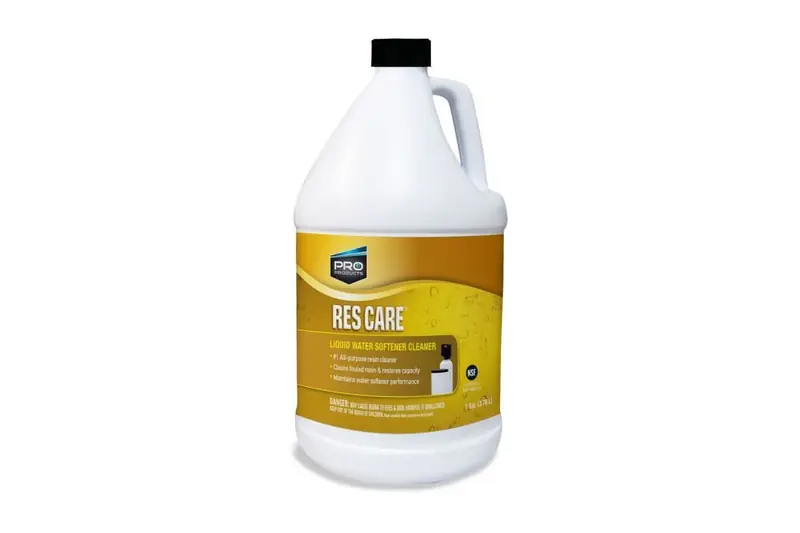
The Pro Res Care label gives two doses. A fouled unit gets half a cup (4 oz) for each cubic foot of resin, added to the brine well while salt is low and followed by a manual regeneration. Routine dosing is a tablespoon (half an ounce) for each cubic foot ahead of every regeneration. QWT sells RES CARE-Q resin cleaner (sold by Quality Water Treatment, our store) for restoring resin that iron and other contaminants have fouled, from $34.99 (October 2026). The resin cleaner guide walks through it step by step.
Sanitize if needed. QWT suggests a bleach treatment every 6 to 12 months; Pentair recommends disinfecting when the softener fouls with organic matter or bacteria and the water picks up an off taste or odor. See how to sanitize a water softener for doses.
Once a year
Inspect the brine tank. Look inside once a year with the salt low. If you see sludge, dirt or a layer of mush on the bottom, it is time to clean the brine tank. If it is clean, leave it.
Check the injector and brine line. QWT recommends inspecting the injector and brine line annually and cleaning the injector screen. A blocked injector is a common reason a softener stops drawing brine. Our injector cleaning guide follows the Fleck manual's procedure, which starts with bypassing the softener, relieving pressure and unplugging the valve.
Service the control valve. QWT's Fleck guide recommends checking the piston, seals and spacers every year; its yearly kit for the 5600SXT is part 60010307. Pentair allows only 100% silicone on O-rings; petroleum grease is out. If you are unsure about opening the valve, a water-treatment dealer or plumber can do it.
Test the softened water. Compare a raw-water sample against a softened one using a hardness strip or kit. SoftPro says a wide gap means the softener is working, and raw and treated readings within 1 to 2 gpg suggest water is going through the bypass. Our guide to testing water hardness explains the method. A TDS meter cannot tell you this: softening swaps hardness minerals for sodium, so total dissolved solids barely change (Montana State).
Every few years
Empty and clean the brine tank. Pentair puts a full empty-and-wash at roughly every three years. Do it sooner if your yearly inspection finds sludge.
Watch resin and valve age. Seals, spacers and pistons in the valve are replaceable, which is why QWT recommends a yearly valve service. Resin wears more slowly; once cleaning can no longer get the contaminants out, Penn State's water-softening guide says it needs replacing. When capacity falls off for good, see how to replace water softener resin.
Prepare for absences and cold. SoftPro says to leave the softener running for trips under two weeks and to use bypass for longer ones, but for no more than 30 days. If the softener sits where it may freeze, SoftPro says to winterize by bypassing and draining both tanks as the owner's manual describes.
Signs it needs attention
Symptoms to act on
Salt level never drops
QWT says salt that never goes down suggests a failing softener. Check for a bridge first, then the injector and brine line.
Hard water or spots return
Check the bypass is fully in service, salt is present, and the hardness setting is right (Fleck manual checklist).
Water standing in the brine tank
Often a clogged injector or blocked brine line, says QWT, which also lists a failed safety float.
Salt disappears fast
QWT points to wrong hardness settings, higher water use, mush or a stuck brine valve.
Musty or rotten-egg smell
SoftPro links brine tank odor to bacteria in stagnant water; clean and sanitize the tank.
Low pressure
Bypass the softener; SoftPro says if pressure returns, the softener is the cause.
For how much salt to add and how often, see how much salt to put in a water softener.
For anything this checklist does not cover, start with the troubleshooting guide, which works through each symptom in order.
Related guides

Common questions
What happens if softener upkeep is skipped for a whole year?
The usual results are a salt bridge, sludge in the brine tank, or an injector clogged with debris, any of which can stop brine reaching the resin. Hard water then passes straight through. A yearly inspection catches these before the water changes.
Does a softener on city water need the same schedule as one on a well?
Mostly, yes. Salt checks, yearly inspections and brine tank cleaning apply to both. Well water with iron needs more frequent resin cleaning; QWT's install guide says iron above 0.3 ppm calls for periodic Pro-Res cleaning.
Is the yearly valve service a DIY job?
You can, using the maker's maintenance kit and the service manual for their valve. Bypass and unplug the unit first, relieve pressure, and lubricate O-rings only with 100% silicone grease. If the valve type or steps are unfamiliar, a water-treatment technician can do it.
Is it worth logging the dates of salt top-ups and cleanings?
A simple log on the brine tank lid helps. Knowing how often you add salt shows when usage changes, which is often the first clue to a bridge, a leak or a settings problem.
How much does routine softener upkeep cost?
Salt is the main ongoing cost; NDSU Extension's figure for sodium chloride runs about $5 to $10 for each 40-pound bag. Resin cleaner and occasional valve parts add to that; QWT puts annual maintenance at about $50 to $200.
Parts for this job
RES CARE-Q By PRO Products, 1 Gallon [Resin Performance Cleaner]
Check current options and prices at Quality Water Treatment.
View at Quality Water Treatmentwatersoftenerguide.net is owned by the team behind SoftPro Water Systems and Quality Water Treatment, which sell some of the parts and systems we link to. Ownership disclosure
More help: see our water softener guides.